
What Is Digital Marketing and Which Channels Actually Earn Their Budget
- October 27, 2019
- Digital Marketing
Digital marketing is any marketing that reaches people through an internet-connected device. Search results, ads, email, social posts, and your own website all count. The definition takes one sentence. The hard part is deciding which of those channels deserves your money this quarter, and that answer changes depending on what you sell and who buys it.
This guide covers the main channels, what each one realistically costs, how long each takes to show results, and which kind of business each one suits. If you are trying to pick where a limited budget goes first, skip to the channel sections below.
What Counts as Digital Marketing
Digital marketing covers every channel where a business reaches customers through a screen. That includes search engines, paid ads, email, social platforms, your website, and increasingly AI assistants that answer questions before anyone clicks a link.
The opposite is offline marketing: print, radio, billboards, direct mail, trade shows. The practical difference is not the screen. It is measurement. With most digital channels you can trace a sale back to the thing that caused it. With a billboard you cannot.
That measurement gap is why digital budgets kept growing while offline budgets shrank. It is also why digital marketing attracts so much bad advice. When every click is countable, it becomes easy to sell activity that looks productive on a dashboard and produces nothing in the bank.
Why the Channel List Matters More Than the Definition
Most businesses do not have a digital marketing problem. They have a channel selection problem.
A dentist, a SaaS company, and a wedding photographer all need customers from the internet. Almost none of their tactics should overlap. The dentist lives or dies on local search. The SaaS company needs content that answers technical questions months before anyone requests a demo. The photographer sells on images and social proof.
Spending the same budget the same way across all three wastes most of it. So the useful question is not what digital marketing is. It is which two or three channels fit how your customers actually decide.
Search Engine Optimization
What it does: earns clicks from unpaid search results by making your pages the best available answer to what people search.
What it costs: your time, or an agency retainer. There is no per-click charge, which is why the economics improve the longer it runs.
How long it takes: months, not weeks. A new site competing in a crowded category can wait six to twelve months for meaningful traffic. An established site fixing technical problems can see movement faster.
Who it suits: businesses with repeat demand that people search for by name or by problem. Plumbers, law firms, software companies, ecommerce stores, anyone whose customers type a question before they buy.
SEO breaks into three pieces. On-page work covers what is on your pages: titles, headings, content, and how well each page matches a real search. Technical work covers whether search engines can crawl, render, and index the site at all. Off-page work covers the links and mentions other sites give you.
The piece most businesses underinvest in is the first one, because it looks like writing rather than marketing. It starts with understanding the keyword research process well enough to know which questions are worth answering and which are already saturated.
The honest limitation: SEO is slow, and it is not free. You are trading cash for time. If you need customers next month, this is not the channel that delivers them.
Paid Search
What it does: puts your ad at the top of search results for chosen terms, and charges you when someone clicks.
What it costs: more than most owners expect. Across 13,474 US search campaigns measured between April 2025 and March 2026, WordStream found an average cost per click of $5.42 and an average cost per lead of $66.69, at an average conversion rate of 8.18%.
Those averages hide a wide spread. Attorneys and legal services averaged $9.87 per click. Arts and entertainment averaged $1.63. Before committing a budget, find your own industry's number rather than the overall average, because the difference between those two figures decides whether the channel is viable at all.
How long it takes: days. This is the one real advantage over SEO.
Who it suits: businesses with a high enough customer value to absorb the cost per lead, and businesses that need demand now. If a customer is worth $200 to you and leads cost $67, the maths is tight. If a customer is worth $5,000, it is not close.
Paid search also works as research. Running ads for a month tells you which terms convert before you spend six months trying to rank for them organically. Plenty of good SEO plans start as paid campaigns.
Most businesses eventually run both. We cover the tradeoff properly in our breakdown of SEO versus paid ads for small businesses, including when it makes sense to run them at the same time. If the account itself is the problem rather than the strategy, our PPC ad management service is built around fixing wasted spend first.
Local Search
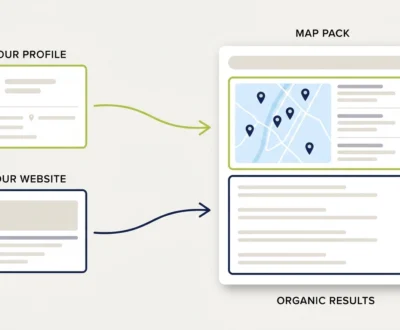
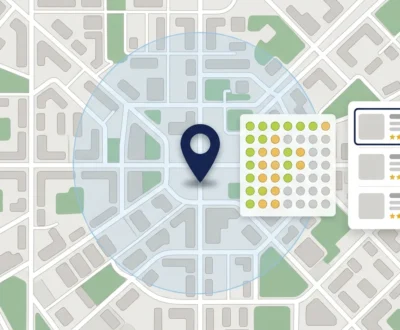
What it does: gets your business into the map results and the local pack when someone nearby searches for what you sell.
What it costs: very little in money. Mostly consistent effort on your profile, your reviews, and your listings.
How long it takes: weeks for profile changes to show, longer for reviews to accumulate.
Who it suits: any business with a physical location or a service area. Restaurants, clinics, trades, salons, repair services, law offices.
This is the highest-return channel for most local businesses and the most neglected. A complete business profile with accurate hours, the right primary category, and a steady flow of recent reviews will outperform a large ad budget in many local markets, because the map pack sits above the paid results on mobile for a lot of queries.
The work is unglamorous. Pick the most specific category that matches your main service. Keep your name, address, and phone identical everywhere they appear. Ask every customer for a review and reply to all of them. None of that requires a tool.
Content Marketing
What it does: attracts and educates people who are not ready to buy yet, so you are the obvious choice when they are.
What it costs: writing time, or a writer. The cost is sustained rather than one-off, which is where most content programmes fail.
How long it takes: six months before you can judge it fairly.
Who it suits: businesses with a considered purchase. If people research for weeks before buying, content reaches them during that research. If people buy on impulse or by proximity, it mostly does not.
Content and SEO overlap but are not the same thing. SEO decides which questions to answer. Content is the answer. Publishing without the first step produces articles nobody searches for, which is the most common way content budgets disappear.
One shift worth planning for: AI assistants now answer a growing share of informational questions directly, without sending a click. That does not make content worthless, but it changes what to write. Pages that define a term are increasingly absorbed. Pages that compare options, show real data, or solve a specific problem still earn the visit.
Email Marketing
What it does: reaches people who already gave you permission, on a channel you own.
What it costs: a platform fee, usually modest, plus the time to write.
How long it takes: immediate, once you have a list. Building the list is the slow part.
Who it suits: almost everyone, and particularly any business with repeat purchase or a long sales cycle.
Email is the only channel on this list where you are not renting the audience. A search algorithm update or a social platform policy change can halve your reach overnight. Your email list cannot be taken away.
The constraint is that it only works on people who already know you. Email is not a way to find new customers. It is a way to stop losing the ones you already reached through another channel, which is why it pairs with everything else rather than competing with it.
Social Media
What it does: builds familiarity, shows your work, and handles the part of buying that runs on trust rather than search.
What it costs: organic posting costs time. Paid social costs money, usually less per click than paid search, though the traffic is colder.
How long it takes: organic reach has fallen far enough that most business accounts see very little without either paid support or genuinely unusual content.
Who it suits: visual businesses and consumer brands. Restaurants, fitness, fashion, interiors, anything where seeing the product is most of the sale. B2B companies do better on a single professional network than spread across all of them.
The common mistake is treating social as a traffic channel. For most businesses it is not. It is a proof channel. People find you through search, then check your social profiles to see whether you are real and whether your work is any good. Judged as a traffic source it looks like a failure. Judged as a trust check it often earns its time.
How to Choose
Start with how your customers decide, not with which channel is popular.
If people search for what you sell when they need it, search is your primary channel. That means SEO for the long term and paid search while the SEO builds. Trades, professional services, ecommerce, software.
If people need you nearby, local search comes first, before anything else. Profile, reviews, listings. Everything else is secondary until that is working.
If people research for weeks before buying, content and email do the heavy lifting, with search bringing them in at the start.
If people buy on how it looks, social and visual content lead, with search supporting branded queries from people who already saw you.
Two channels done properly will beat six done badly. The businesses that struggle are almost always the ones spreading a small budget across everything so that nothing reaches the threshold where it starts to work.
What a Realistic Budget Looks Like
There is no standard percentage, and the benchmarks that circulate do not agree with each other.
The figure most often quoted comes from The CMO Survey, run by Duke University's Fuqua School of Business with Deloitte and the American Marketing Association. Reports of its recent rounds put marketing budgets anywhere from around 5% to nearly 9% of revenue, depending on which round and which measure is being cited. The respondents are also mostly large companies. A business with eight employees has little to learn from what a company with eight hundred spends.
Work backwards instead. Decide what a customer is worth over the time they stay with you. Decide what you can afford to pay to acquire one. Then check whether the channel you are considering can deliver a lead under that number. Paid search makes this easy to calculate up front. SEO does not, which is why it is usually funded as a fixed monthly commitment rather than a per-lead cost. Our ongoing monthly SEO service works that way for the same reason.
Common Mistakes
Starting everywhere at once. A small budget split six ways never reaches the level where any single channel produces results.
Judging slow channels on fast timelines. Cancelling an SEO programme at month three is the most expensive decision in this entire category, because you pay the full cost and collect none of the return.
Measuring the wrong thing. Rankings, impressions, and followers are not revenue. Track leads and sales, and track which channel produced them.
Treating the website as finished. Every channel sends traffic to the same place. A slow or confusing site wastes the budget of every channel feeding it at once.
Copying a competitor's channel mix. You can see what they do. You cannot see what it costs them or whether it works.
Frequently Asked Questions
Where should a small business spend its first marketing dollar?
On whichever channel matches how your customers find you. For a local service business that is almost always your Google Business Profile and reviews, because the cost is close to zero and the map pack sits above paid results on mobile. For a business selling to people who research online first, it is usually search.
Is SEO or paid advertising better for a small business?
They solve different problems. Paid search produces leads within days and stops the moment you stop paying. SEO takes months and keeps working after the spend ends. Most businesses that can afford both run paid while SEO builds, then reduce paid spend as organic traffic grows.
How long before digital marketing produces results?
Paid search can produce leads in days. Local search changes show within weeks. SEO and content usually need six to twelve months before you can judge them fairly. Any agency promising fast organic rankings is either misunderstanding the work or misrepresenting it.
How much should I spend on digital marketing?
There is no fixed percentage that applies across industries. Work out what a customer is worth to you, decide what you can afford to pay to acquire one, then test whether a channel can deliver under that figure before committing a long-term budget.
Do I still need SEO if AI assistants answer questions directly?
Yes, though what you optimise for shifts. AI answers are generated from pages that search systems retrieved, so being retrievable still depends on ordinary SEO. What changes is the content mix: simple definitional pages get absorbed into AI answers, while comparisons, original data, and specific problem-solving pages still earn clicks.
Can I do digital marketing myself?
The local search work, yes, and most businesses should. Reviews, profile accuracy, and basic listings need no specialist. Paid advertising and technical SEO are where inexperience gets expensive quickly, because you can spend a lot of money before you find out it is not working.
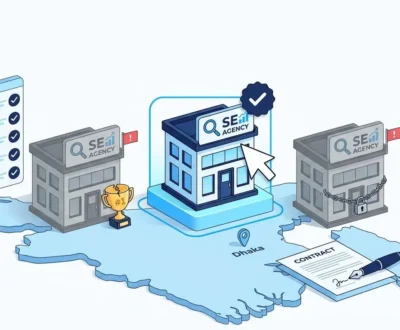
If you are weighing these channels against each other and want an outside read on which ones fit your business, that is the work we do as an SEO agency for small and mid-size businesses. We will tell you when a channel is wrong for you, including when that channel is one we sell.
Sources: Google Ads cost and conversion benchmarks from WordStream's 2026 study of 13,474 US search campaigns, covering April 2025 to March 2026. Marketing budget context from The CMO Survey, run by Duke University's Fuqua School of Business with Deloitte and the American Marketing Association; reported figures vary by round and by measure, so no single percentage is quoted here.
Ruth Carol is a professional SEO expert providing services concerning to search engine optimization process. She has 10 years long experience with vast knowledge in the field of modern search engine optimization process and is continuing. Her educational background, along with her working experience in this field, enables her to gain ample knowledge in this subject area. She was an active volunteer in google serve program and a regular blog writer subjecting SEO optimization process and special tips. Follow her blogs on seoviser. Besides, she is an active member of the Chang Mei International SEO Conference. Furthermore, she is the founder of SEO Viser, which is an SEO agency providing SEO solutions all over the world. She aims to help companies ranging from small to big to develop a long-lasting solution to rank their site. Apart from that, she provides consultancy services related to search engine optimization and contributing to social media and online platforms like Fiverr, Upwork, etc. To know more about her services and anyone can visit seoviser or simply email her through her website. She is a great mind and loves to share knowledge. Contact her at seoviser.
OUR SERVICES


Request a free quote
We offer professional SEO services that help websites increase their organic search score drastically in order to compete for the highest rankings even when it comes to highly competitive keywords.
More from our blog
See all posts